 Skip to content

Buying a new house is one of the biggest financial decisions you’ll make. It’s exciting, but it also involves a lot of moving parts—financing, insurance, understanding what you’re actually getting, and planning for what comes next. This guide walks you through the whole process: how to buy a new build, how to pay for it, what home insurance actually costs and why, what’s trending in 2025, what features matter, and how to keep everything running smoothly once you move in. By the end, you’ll have a clear picture of what to expect and how to protect your investment.
What Are the Key Steps in Buying a New Construction Home?
Buying a new build is different from buying an existing house. You’re not just choosing a finished product—you’re making decisions about what gets built before it’s built.
Start by figuring out what you actually want and can afford. Get pre-approved for a mortgage so you know your budget going in. Then research builders in your area, look at models, and understand what’s included in the base price versus what costs extra.
Once you’ve found a builder and a home you like, you’ll sign a purchase agreement. This is where you lock in the price, the timeline, and what’s included. Then comes the fun part (or tedious part, depending on your perspective): the design center. You’ll pick finishes, fixtures, colors, and upgrades. Do you want granite or quartz? Which appliances? How much energy efficiency are you willing to pay for?
During construction, you’ll get periodic inspections to make sure things are on track and built to code. At the end, you’ll do a final walkthrough before closing. This is your chance to catch any punch-list items—things that weren’t quite finished or don’t match what you agreed to.
On closing day, you sign paperwork, pay your down payment and closing costs, and the house is yours. Your builder’s warranty kicks in at this point.
- Get pre-approved for a mortgage before you start house hunting.
- Compare builders based on reputation, quality, and what they include.
- Read the purchase agreement carefully—this locks in price, timeline, and inclusions.
- Spend time at the design center picking finishes and upgrades.
- Attend inspections during construction if you can.
- Do a final walkthrough before closing to catch any issues.
How Do You Start the New Home Buying Process?
Get your finances in order first. Check your credit report for errors, understand your debt-to-income ratio, and talk to a lender about what you can actually afford. Interest rates matter—a difference of 0.5% on a $400K mortgage is thousands of dollars over 30 years.
Then look at what’s available. Visit new home communities, attend open houses, and get a feel for what builders are offering. Builder incentives change seasonally, so timing can matter.
What Should First-Time New Home Buyers Know?
The base price is rarely the real price. You’ll add upgrades, and you’ll have closing costs. Some builders are transparent about this; others bury it in fine print. Ask for a detailed cost breakdown before you commit.
Also understand the warranty. Most builders give you one year for cosmetic stuff (paint, trim), two years for mechanical systems (HVAC, plumbing, electrical), and ten years for structural problems. After that, you’re on your own.
Construction timelines slip. It happens. Budget for the possibility that your closing date moves, especially if you’re selling another house at the same time.
What Are the Benefits of Buying a New Build Home?
Everything is new. Your roof is new. Your HVAC is new. Your appliances are new. You don’t inherit someone else’s deferred maintenance.
New homes are built to current code, which means better insulation, more efficient systems, and smarter wiring. Your utility bills will be lower than an older house of the same size.
If you want something specific—a certain layout, certain finishes, certain systems—you can get it. You’re not compromising on someone else’s choices.
And for the first few years, you’ll have fewer surprises. Everything works. Nothing’s falling apart.
How Does a New House Compare to an Existing Home?
| Aspect | New Construction | Existing Home |
|---|---|---|
| Price | Usually 5–10% higher upfront | Lower sticker price, but unknown repair costs |
| Maintenance | Minimal for 5–10 years | Could face immediate roof, HVAC, or plumbing work |
| Energy bills | Lower—modern insulation and systems | Higher—older homes are less efficient |
| Customization | You pick finishes before it’s built | You work with what’s there |
| Financing | Construction loan, then permanent mortgage | Standard mortgage |
How Can You Finance a New Build Home?
Financing a new build is different because the house doesn’t exist yet. You can’t get a standard mortgage on a house that hasn’t been built.
Most buyers use a construction-to-permanent loan. You get one loan that covers the building phase and then converts to a regular mortgage after the house is done. Your rate is locked in from the start, so you don’t have to worry about rates changing while the house is being built.
Another option is a one-time close loan. It’s similar, but it’s all one process from start to finish instead of two separate loans.
You’ll need a down payment—usually 10–20% of the final value. During construction, you’ll make interest-only payments. Once the house is done and you get your certificate of occupancy, the loan converts to a standard mortgage and you start making principal and interest payments.
Appraisals for new construction are based on what the finished house will be worth, not what it costs to build. This matters because sometimes builders can build a house cheaper than the market price, and sometimes it costs more.

What Mortgage Options Are Available for New Construction Homes?
Construction-to-permanent loans are the most common. You lock in your rate, the lender funds the construction in stages, and when it’s done, it becomes your regular mortgage.
One-time close loans do the same thing but in one underwriting process instead of two.
Some lenders also offer renovation loans (like FHA 203k loans) that let you buy an existing house and finance the renovation separately. But these are for existing homes, not new construction.
What Are the Typical Closing Costs for New Homes?
Closing costs for new construction typically run 2–5% of the loan amount. This includes appraisal fees, loan origination fees, title insurance, recording fees, and builder-related charges.
In some developments, there are also HOA initiation fees or community development fees. Ask about these upfront—they can add thousands to your closing costs.
How Do Property Taxes Affect New House Financing?
Property taxes on new homes are assessed based on the finished value, which is usually higher than the land value alone. Your lender will estimate annual taxes at closing and roll that into your monthly escrow payment.
In some areas, property values jump after the house is finished, which can push taxes up 3–5% in the first few years. Budget for this.
Some states or counties offer tax breaks for new construction. Look into whether yours does—it can help.
What Is the Cost of New Home Insurance and How Is It Determined?
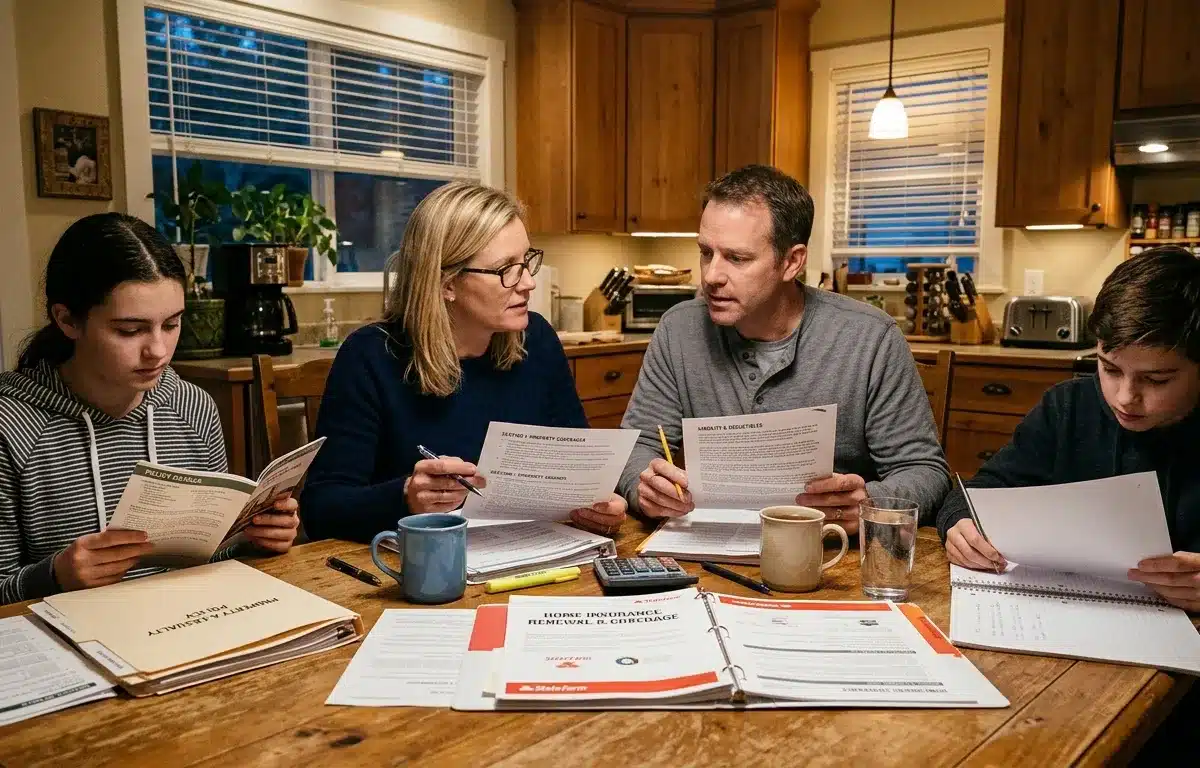
Home insurance for a new house is based on what it would cost to rebuild it. Insurers look at the square footage, the materials, the location, the local crime rate, and whether you have safety features like smoke detectors or security systems.
A new house usually costs less to insure than an older one because everything is up to code and in good condition. But the cost still varies a lot depending on where you live and what you choose.
What Types of Home Insurance Are Available for New Houses?
HO-3 is the standard policy for homeowners. It covers the house structure, your stuff inside, liability if someone gets hurt on your property, and additional living expenses if the house becomes unlivable.
HO-5 is more comprehensive—higher limits, fewer exclusions, better coverage for valuables.
You can also add riders for specific things: flood insurance if you’re in a flood zone, earthquake coverage if you’re in an earthquake area, or coverage for high-value items like jewelry or art.
Which Factors Affect New House Insurance Costs?
- What the house is built from (wood frame, brick, concrete)
- How far you are from a fire station
- Whether you have a security system or smoke detectors
- Your deductible—higher deductible means lower premium
- Local crime rates
- Local weather risks
How Can You Get Accurate Quotes for New Home Insurance?
Get the specs from your builder: square footage, materials, roof type, when it was built. Tell insurers about any safety features. Get quotes from at least three companies. Don’t just look at the premium—look at what’s actually covered and what the deductibles are.
If you’re getting a mortgage, your lender will require you to have homeowners insurance before closing. So factor this into your timeline.
What Are the Latest New House Market Trends in 2025?
The new construction market is busy right now. Builders are offering incentives to move inventory. Prices are up, but not as much as they were a few years ago. Inventory is higher in most markets, which means buyers have more choices and a bit more negotiating power.
In August 2025, annualized new single-family home sales hit 800,000 units—up 20.5% from early 2024. Median prices are around $413,500. In the top 100 metro areas, inventory is up 20% from last year.
The gap between new and existing home prices is narrowing. Used to be new homes cost 9–10% more. Now it’s closer to 8%. That’s partly because existing homes are selling for more and partly because builders are discounting.
| Indicator | 2024 | 2025 | Change |
|---|---|---|---|
| U.S. new home sales (annualized) | 665,000 | 800,000 | +20.5% |
| Median new home price | $391,000 | $413,500 | +5.8% |
| Inventory in top 100 metros | +16% | +20% | +4 points |
| Price gap (new vs. existing) | 9.4% | 7.8% | -1.6 points |
How Have New Home Sales and Prices Changed Recently?
Sales are up. Builders are discounting more than they did last year. Buyers are getting better deals on upgrades and incentives.
Prices are still rising, but slower. The market feels less frenzied than it did in 2021–2022.
What Is the Price Gap Between New and Existing Homes?
New homes used to be a lot more expensive. Now the gap is tightening. If you’re comparing a new build to an existing house, look at total cost of ownership—mortgage, taxes, insurance, and repairs. New homes cost less to maintain for the first 5–10 years, which can offset the higher initial price.
How Are Buyer Preferences Shaping New Home Features?
People want smart home wiring built in from the start. They want energy-efficient systems. They want open floor plans and outdoor living space. About 79% of recent buyers say they’d pay 7–8% more for a home that’s pre-wired for automation or built with sustainable materials.
What Features and Designs Are Popular in New Houses Today?
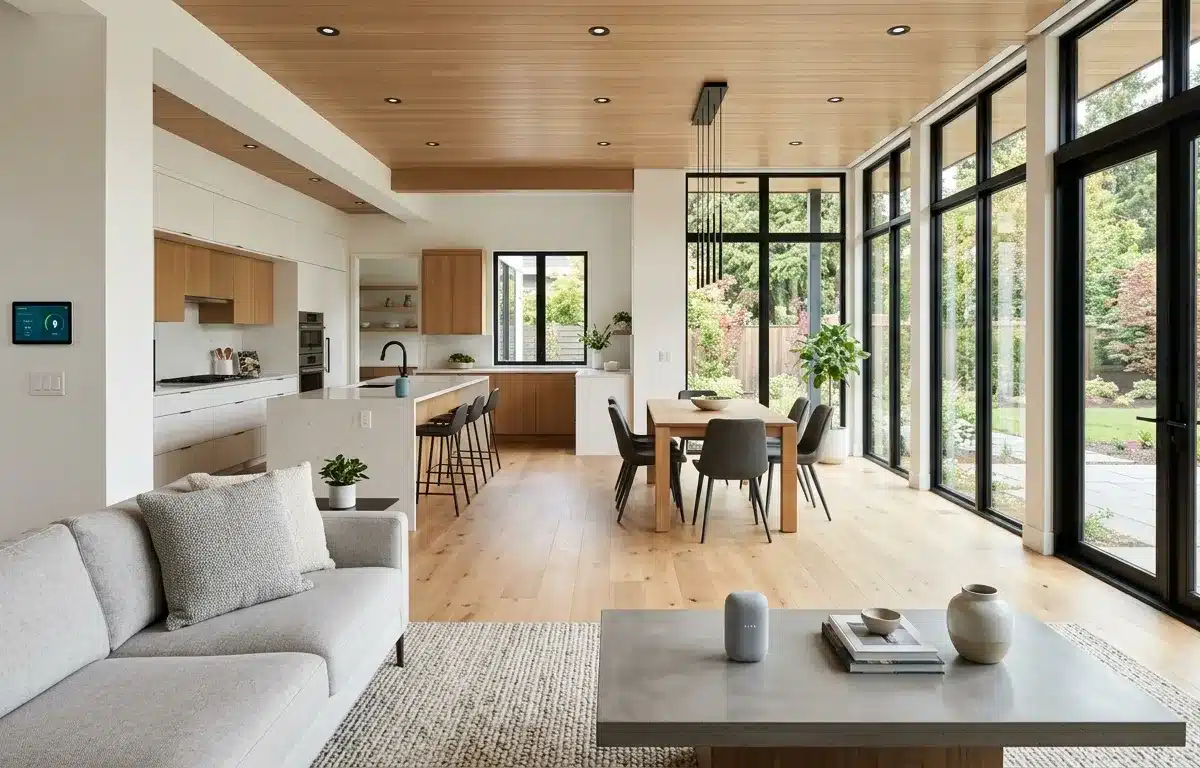
Open floor plans are standard now. Kitchen, dining, and living area flow together. It feels bigger and works better for how people actually live.
High ceilings and big windows let in more light. Some newer homes have smart glass that tints automatically to reduce glare and cooling costs.
Built-in smart home hubs let you control lighting, temperature, security, and entertainment from your phone or a voice assistant. The wiring is hidden in the walls—it doesn’t look like a tech setup.
Sustainable features are becoming standard: energy-efficient appliances, heat pump water heaters, better insulation, solar panels on the roof. These cost more upfront but pay for themselves through lower utility bills.
Natural materials—wood floors, stone accents, low-VOC paints—are popular because they look good and don’t off-gas chemicals into the house.
How Is Smart Home Technology Integrated into New Builds?
Builders plan for smart home wiring before the walls go up. Network cables, access points, and control panels are built in. When you move in, everything is ready to use. You don’t have to retrofit anything—no running cables through walls or hiding equipment.
Some builders offer smart home packages with everything pre-installed: lighting scenes, thermostat scheduling, security cameras, door locks, voice assistants. You just move in and use it.
What Are the Benefits of Sustainable and Energy-Efficient New Homes?
Lower utility bills. A new energy-efficient home can cut your heating and cooling costs by 20–30% compared to an older house.
Better for the environment. Less energy use, sustainable materials, better water efficiency.
Tax credits and rebates. Federal tax credits for solar installations and high-efficiency equipment can add up. Some states offer additional incentives.
Higher resale value. Buyers care about efficiency and sustainability, so your house will be easier to sell.
What Are the Top New Home Design Trends for 2025?
- Biophilic design: living walls, natural wood, plants everywhere. It’s supposed to be better for your mental health.
- Flexible spaces: sliding walls, multipurpose rooms that adapt to how you live.
- Outdoor living: covered patios, outdoor kitchens, fire pits. The backyard is basically another room.
- Minimalist color schemes with bold accent walls or statement fixtures.
- Home offices built in from the start. Remote work is normal now.
How Do New Home Warranties and Maintenance Affect Ownership?
Your builder’s warranty covers defects in workmanship and materials. Most warranties are structured like this:
- Year 1: Cosmetic stuff—paint, trim, caulk, minor adjustments.
- Years 2: Mechanical systems—HVAC, plumbing, electrical.
- Years 1–10: Structural defects—foundation, framing, major load-bearing issues.
After the warranty expires, you’re responsible for repairs. This is why maintenance matters. If you keep up with routine maintenance—HVAC service, gutter cleaning, roof inspections—you’ll catch problems before they become expensive.
What Does a New Home Warranty Cover?
One-year coverage handles cosmetic defects and workmanship issues. Things that are cosmetic but annoying: paint drips, trim gaps, cabinet adjustments.
Two-year coverage is for mechanical systems. If your AC stops working or your water heater fails, the builder fixes it (or pays for it).
Ten-year structural coverage protects against major defects in the foundation, framing, or load-bearing walls.
Some builders offer extended warranties you can buy. It’s worth asking about.
What Common Issues Should New Homeowners Watch For?
Even new houses settle and shift. You might see hairline cracks in drywall or small gaps around windows. This is normal. Catch these during the first year while you’re still under warranty.
Check your appliances and systems during the first month. Make sure everything works the way it should.
Watch for water intrusion around windows or doors. If you see staining or soft spots, report it immediately.
How Should You Maintain Your New House for Longevity?
- HVAC: Get it serviced before cooling season and before heating season.
- Gutters: Clean them twice a year so water doesn’t back up into the house.
- Roof: Walk around and look for loose shingles or flashing issues once a year.
- Smart home stuff: Keep software updated and check that everything still works.
- Air filters: Replace them every 1–3 months depending on what you have.
What Are the Essential Tips for First-Time New Home Buyers?
Know your budget before you start looking. This includes the mortgage payment, property taxes, homeowners insurance premiums, HOA fees if there are any, and maintenance reserves. A lot of first-time buyers forget about maintenance and get surprised when the water heater dies.
Get a detailed cost breakdown from the builder. What’s included in the base price? What costs extra? How much are closing costs? Don’t guess.
Work with a lender who knows new construction. Construction-to-permanent loans are different from regular mortgages, and you want someone who understands the process.
Stay in touch with your builder during construction. Check in on progress. Ask questions if something doesn’t look right.
How Can First-Time Buyers Prepare Financially and Logistically?
- Fix your credit report before you apply for a mortgage.
- Save for a down payment and closing costs.
- Get pre-approved so you know your budget.
- Keep some money in reserve for unexpected costs or upgrades.
What Questions Should First-Time Buyers Ask Builders and Insurers?
Ask the builder:
- What’s included in the base price?
- What are the most popular upgrades and how much do they cost?
- What does the warranty cover and for how long?
- How does the change order process work if you want to modify something?
Ask your insurance agent:
- What discounts do you offer for new construction?
- Do you have discounts for smart home systems or security features?
- What’s the deductible and what’s actually covered?
How Can First-Time Buyers Navigate the New Home Buying Journey Smoothly?
Make a timeline. Mark deposit dates, construction milestones, the expected closing date. Share it with your lender and builder so everyone’s on the same page.
Get regular updates from your builder. Don’t just wait for the final walkthrough to see the house.
Do your final walkthrough at least two weeks before closing. This gives the builder time to fix punch-list items.
Hire an inspector if you want an independent check. Some builders are great, some cut corners. An inspector can catch things you might miss.
Your Journey to a New Home Starts Here
Buying a new house is complex, but it’s manageable if you break it down into steps. Know your budget, pick a good builder, make informed choices about finishes and upgrades, stay involved during construction, and plan for maintenance after you move in.
Home insurance is a big part of protecting your investment. Rates vary a lot depending on where you live and what you choose, so get multiple quotes and understand what you’re actually buying.
If you’re in the Houston area and need help figuring out home insurance for your new house, Truong Insurance can walk you through your options. We work with a lot of new homeowners and understand what matters. Contact us at (281) 377-5049 to get a quote and talk through what coverage makes sense for your situation.
